I spent my entire twenty-second year on this planet trying to prove that physics was a lie. I’m 6'1". In the calisthenics world, that makes me a giant. A skyscraper. I watched my friend, who is 5'7" and built like a fire hydrant, hold a full planche after only eight months of training. It looked effortless. He just leaned forward and floated. I tried to copy his exact routine for a year. I did the leans. I did the tuck holds until my wrists felt like they were being crushed by a hydraulic press. I made exactly zero progress. I didn't just fail; I failed so hard I ended up with a shoulder impingement that kept me from even doing a push-up for three months. That was the moment I realized the "universal" planche tutorials on YouTube are total garbage for anyone with long legs.
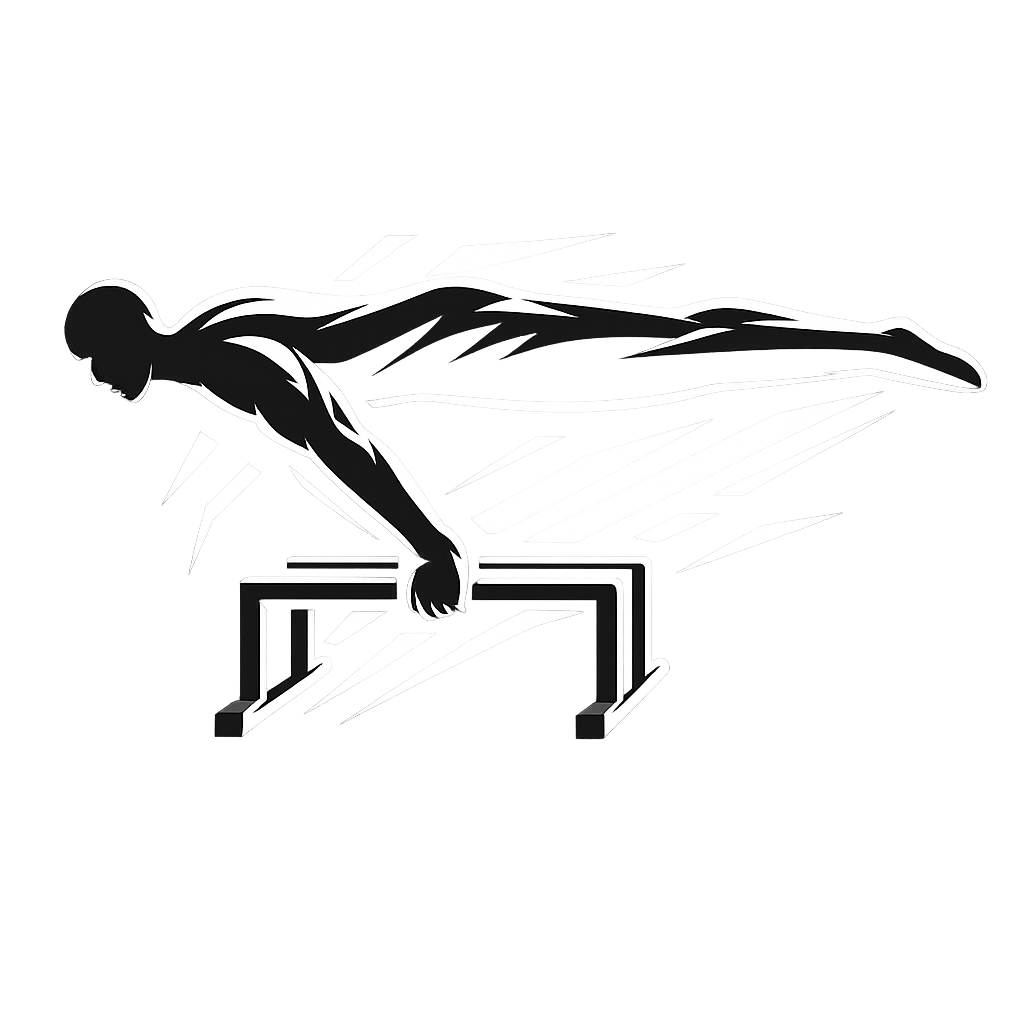
The planche is a lever. That's it. It’s a math problem. If you’re tall, the math is trying to kill you.
The Lever Curse
Most people get the "lean" completely wrong. They think the planche is a shoulder strength exercise. It’s not. It’s a center of mass exercise. When you’re short, your center of mass is tucked tucked tight to your shoulders. When you’re 6'1", your center of mass is practically in a different zip code. Every extra inch of height doesn't just add weight; it multiplies the torque on your anterior deltoids and your biceps tendons.
But look at the average tutorial. They tell you to "just lean more." If I lean any more, my face is going to hit the concrete. For a tall athlete, the traditional planche lean is a trap. You’re trying to fight gravity with a lever that is twice as long as the guy giving the advice. It’s physically impossible to use the same angles.
Anyway, I remember this guy I knew, Marcus. He was 33, about my height, and had been chasing the planche for five years. He was strong as an ox—weighted pull-ups with two plates, overhead pressing massive numbers—but he couldn't even hold a clean advanced tuck. He was frustrated. He felt like a failure because he couldn't hit a "basic" elite move. I had to sit him down and explain that his legs were literally his own worst enemy. His femurs were so long they acted like two heavy pendulums dragging his hips toward the floor.
The Unspoken Difficulty: The "Bicep Tear" Reflex
Here is the thing only the guys who have actually coached tall athletes know: the unspoken difficulty isn't the shoulders. It’s the biceps. When a tall guy lean into a planche, the tension on the distal bicep tendon is astronomical. It’s a weird, deep, terrifying stretch.
Your brain has a built-in safety switch. If the tension on that tendon gets too high, your nervous system will literally "unplug" the muscle to keep it from snapping off the bone. This is why tall guys often "collapse" out of a planche hold even when they feel like they have the strength to stay up. It’s not a lack of power. It’s your brain protecting you from a surgical bill. You have to spend months, maybe years, just conditioning the connective tissue before you even worry about the actual hold. Short guys don't have to deal with this nearly as much. They can "muscle" through it. We have to negotiate with our biology.
My Rule of Thumb for Long-Limbed Freaks
I’ve been in the game for fifteen years now. I’ve seen enough tall guys quit calisthenics in frustration to fill a stadium. Here is my non-textbook rule of thumb: If your hips aren't at least three inches higher than your shoulders in a tuck hold, you aren't ready to lean.
Most people try to keep a flat back from day one. That’s a mistake if you have long levers. You need to "over-compress." You need to get your knees into your chest so tight it feels like you're trying to disappear. By raising your hips higher than your shoulders, you’re artificially shortening the lever. You’re giving your shoulders a break. Only once you can hold that high-hip tuck for 30 seconds should you even think about flattening your spine.
Look, the bar is a cruel judge. If you’re tall, you have to accept that your planche will never look like a 5'2" gymnast's. It’s going to be shakier. It’s going to require three times the effort for half the "hold time."
The "Body Proportion" Lie
I hate the generic advice that "anyone can planche." It’s technically true, sure. But it’s like saying anyone can be an NBA center. Some people are just built for certain tasks.
If you have a long torso and short arms, the planche is going to be your personal hell. Which brings me to the reality of training. You have to stop comparing your "progress" to people who don't share your skeleton. I spent so much time being angry at my brother because his progress was linear and mine was a jagged mess of injuries and plateaus.
Anyway, I eventually stopped trying to train like him. I started focusing on "protraction strength" and straight-arm pulls. I treated my biceps like they were made of glass. I stopped testing my max hold every day like a desperate kid.
Look at the elite guys. Almost all of them are short. That’s not a coincidence. It’s physics. But being tall gives you an advantage in other areas—like the front lever or anything involving a long reach. Why are we so obsessed with the one move that is literally designed to punish us?
The Ego Trap of the "Full" Planche
The hardest part about being a tall athlete isn't the strength. It’s the ego. You want that "Full Planche" photo for the 'gram. You want to look like the guys in the park. But for a tall guy, a "Straddle Planche" is often a greater feat of strength than a short guy's "Full."
We have more mass to stabilize. We have more distance to cover.
I see tall guys at the gym all the time, arching their backs, legs sagging, trying to force a full planche that looks like a dying banana. It’s garbage. It’s a waste of time. They’re going to blow out a disc or a shoulder. If you’re tall, your "Full" might just be a very wide, very clean straddle. And you know what? That’s fine.
Anyway, I’m headed out to the bars now. I’m still working on my straddle. It’s not perfect. It’s not as "pretty" as my brother's. But I’m 33 now, and my shoulders don't click anymore. I stopped fighting my height and started working with it.
Which brings me to my final thought. If you’re over 6 feet and you’re still trying to follow a "12-week planche program," you’re setting yourself up for heartbreak. Throw the program away. Listen to your tendons.
Stop trying to be small. Start being strong for your size.
Test Your Straight-Arm Strength
Are your shoulders ready for the lean? Check your 1RM and see where you rank against the standards.
1 REP MAX CALCULATOR