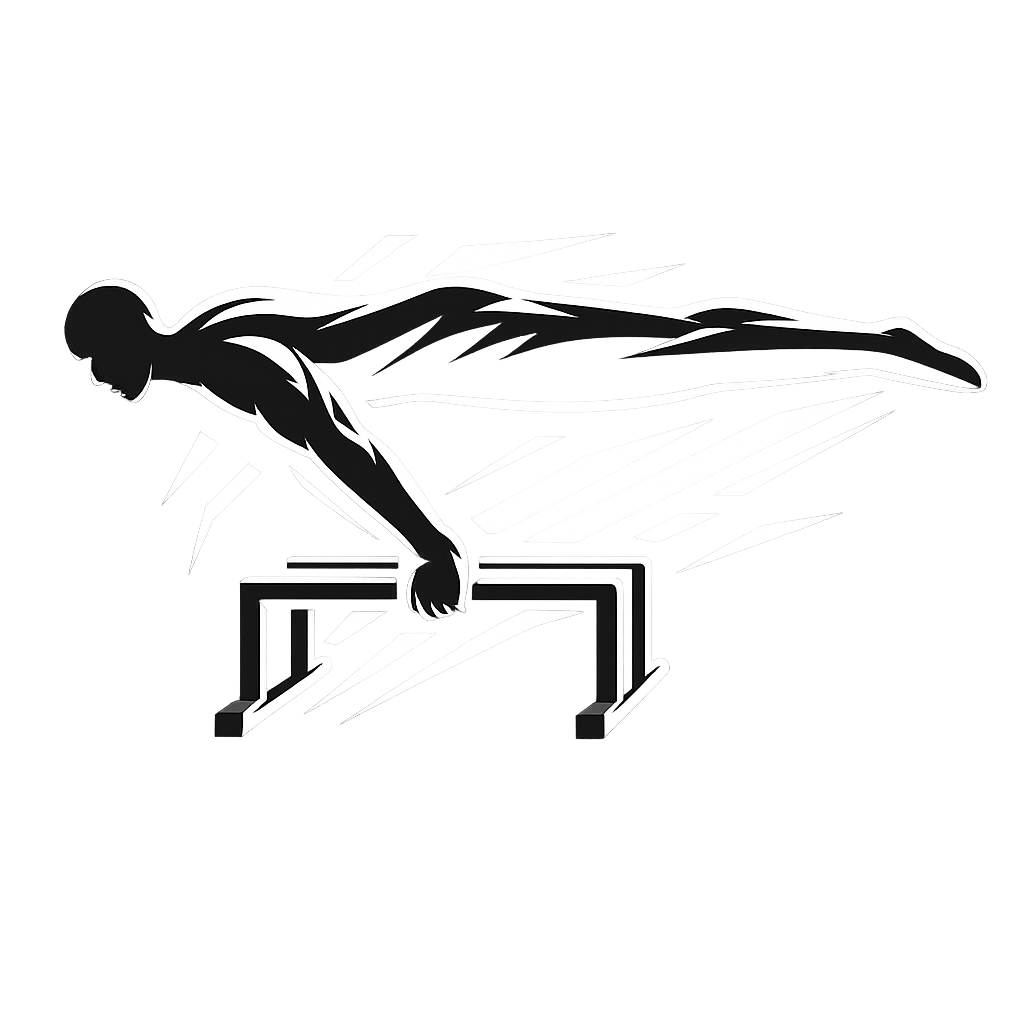
The full planche is often called the “Holy Grail” of calisthenics. Done correctly, it looks unreal—your body held parallel to the floor, arms locked, feet hovering, no visible effort. To someone watching, it seems like balance. It isn’t. It’s brute force applied with surgical precision.
Because advanced athletes make it look easy, many beginners assume they can achieve it in six to twelve months. For most people, that timeline is unrealistic. More often than not, chasing it too quickly leads to stalled progress or elbow and shoulder injuries.
Earning a full planche isn’t just about adding strength. It requires structural adaptation—muscle, tendon, joint stability, and nervous system coordination all developing together. To understand why it takes years, not months, you need to look at both the mechanics and the physiology behind it.
Related Reading: Top Aesthetic Bodyparts
Muscle up guide Lat Pulldown vs Pull-upSection 1: The Physics of the Planche – Torque vs. Gravity
At its core, the planche is a lever problem. Your body becomes a rigid beam suspended behind your hands.
The Lever and the Fulcrum
In a push-up, your feet and hands both contact the ground. Your feet share the load. In a planche, your hands are the only contact point. Everything behind them—your torso, hips, and legs—creates rotational force pulling you toward the floor.
- The fulcrum is your wrist and shoulder complex.
- The resistance is your bodyweight multiplied by the horizontal distance from your shoulders to your center of mass, which sits roughly around your hips.
That horizontal distance is the moment arm. The longer it is, the greater the torque your shoulders must resist. Taller athletes or those with longer legs automatically face more mechanical disadvantage.
Where the Force Comes From
To stay horizontal, your muscles must generate equal and opposite torque.
- The anterior deltoids carry the primary load. They are responsible for holding your body from tipping forward.
- In a straight-arm position, the biceps—especially the short head—act as stabilizers, protecting the elbow from hyperextension under load.
- The serratus anterior and chest maintain scapular protraction. If your shoulder blades retract or “wing,” your structure collapses and stress shifts toward passive tissues.
- Your posterior chain—glutes, spinal erectors, and hamstrings—must stay fully engaged to prevent your hips from dropping.
Section 2: The Strength Requirement – The Bench Press Comparison
A full planche is often estimated to require force production comparable to pressing roughly 2.3 to 2.7 times your bodyweight horizontally. For a 75 kg athlete, that translates to internal joint forces similar to a 180–200 kg press.
Why a Big Bench Isn’t Enough
The bench press is a bent-arm movement. It distributes load across chest, triceps, and shoulders with mechanical advantage. The planche removes that advantage. With locked elbows, the load shifts toward the anterior deltoids and connective tissues. In extreme cases, tendons—not muscles—become the weak link.
Tendon Adaptation
Muscles adapt relatively quickly. Within weeks, they increase force output and size. Tendons adapt much slower due to limited blood supply. Collagen remodeling and thickening can take months or years. Progressing your lean faster than your tendons can adapt is one of the main causes of chronic elbow pain.
Section 3: The Four Phases of Progression
Before lifting your feet, you must master the planche lean. This phase builds wrist tolerance, scapular control, and initial elbow tendon strength. Time under tension matters more than intensity here.
Bringing your knees to your chest shortens the lever. Tuck and advanced tuck planche holds build straight-arm strength without full torque demands. Breathing under maximal tension becomes a skill of its own.
Extending the legs outward reduces torque compared to a full planche but increases demand on hip strength. This is where most athletes spend the majority of their journey.
Bringing the legs together lengthens the lever to its maximum. This stage requires full-body tension and precise motor unit recruitment. Neural efficiency becomes critical.
Section 4: Realistic Timelines
Actual timelines vary widely, but broad patterns exist:
- Beginner (minimal strength): 4 to 6+ years of consistent training.
- Intermediate (10-15 Pseudo Pushups, 5-10s Adv Tuck): 2 to 4 years.
- Advanced (Clean Straddle Planche): 1 to 2 years to close the gap.
Section 5: Common Reasons for Plateaus
- CNS Fatigue: The planche is neurologically demanding. Training at maximal intensity daily often leads to regression.
- Lack of Specificity: Traditional presses don't replace straight-arm work. Specific joint angles must be trained directly.
- Weak Stabilizers: If the rotator cuff or scapular stabilizers are underdeveloped, the body limits force output to protect the shoulder.
Summary
The full planche is a long-term project. It demands structural resilience, tendon patience, and technical precision. Rushing the process typically leads to elbow pain or stalled progress. Approached methodically, it becomes achievable over time.
It is less about defying gravity and more about respecting it.
FAQ: Unlocking the Full Planche
1. Why do my elbows hurt when I start leaning forward?This is usually "Planche Elbow," often caused by your muscles being stronger than your tendons. Your biceps tendons aren't used to the massive tension of a straight-arm load. If you feel a sharp or dull ache, back off the intensity and focus on lighter leans to allow for collagen remodeling.
2. Can I achieve a planche if I have long legs?Yes, but it will take longer. Longer limbs increase the "moment arm," meaning you have to generate significantly more torque than a shorter athlete of the same weight. You will likely need a much deeper lean to compensate for the weight of your legs.
3. Is a 100kg bench press enough of a base to start planche training?A big bench provides a base of muscle mass in the delts and chest, but it doesn't prepare your nervous system or tendons for straight-arm strength. You might have the "engine," but you don't yet have the "chassis" to handle the torque.
4. How often should I train the planche?Because it is so demanding on the Central Nervous System (CNS), 2 to 3 high-intensity sessions per week is usually the limit for most. You can do lighter "greasing the groove" leans on off days, but maximal holds require full recovery.
5. Should I use a flat palm or "fingertip" grip?Most athletes prefer a flat palm or slightly turned-out hands (45–90 degrees) to reduce wrist strain. Using parallettes is also a great way to train if you have limited wrist flexibility, as they allow for a neutral grip.
6. Why does my straddle planche feel so much easier than my full?The straddle effectively shortens the lever. By moving your feet out to the sides, you bring your center of mass closer to your hands. Closing the legs for the full planche adds several inches to that lever, which exponentially increases the torque.
7. Can I train the planche and the front lever on the same day?You can, as they use opposing muscle groups (pushing vs. pulling). However, both are very CNS-intensive. If you find your strength dropping in the second move, consider split days or alternating which move you train first.
8. Do I need to be able to do a handstand first?It isn't a strict requirement, but it helps immensely with shoulder overhead stability and body awareness. However, remember that a handstand is a balance move, while a planche is a pure strength hold.
9. What is "Scapular Winging" and why is it bad?Winging is when your shoulder blades pop out away from your back. This means your serratus anterior has failed to maintain protraction. Training in this position is dangerous as it dumps the entire load onto the shoulder joint capsule instead of the muscles.
10. When should I move from Tuck to Advanced Tuck?Only when you can hold a perfectly clean Tuck Planche with high hips and a "hollow" back for at least 15–20 seconds. If you move up too early, your form will break, and you'll build bad habits that are hard to fix later.